About
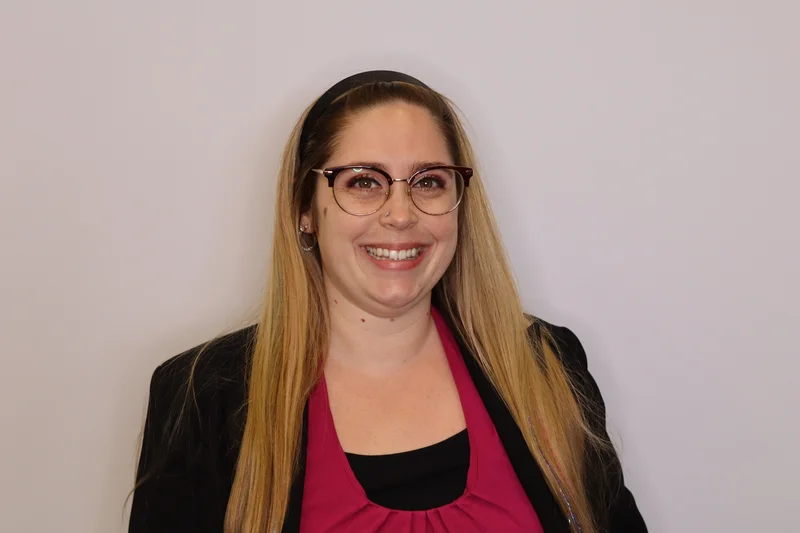
I am a limited permit mental health counselor (MHC-LP) and a PhD candidate in Counselor Education and Supervision at Waynesburg University. My path into this field began with a deep curiosity about people, their stories, and the conditions that help them heal and grow. That curiosity has carried me through crisis counseling, addiction treatment, community mental health, and now into the classroom and supervision room where I support the next generation of counselors finding their own way.
Three commitments guide my work. Leadership, because I believe that advocating for our clients, our students, and our profession is not optional. Mentorship, because none of us become the counselors we hope to be alone. And trauma-informed practice, because understanding the weight people carry is essential to offering care that does not cause more harm. These commitments show up in every session I facilitate, every class I teach, and every supervision relationship I enter.
Outside of my professional roles, I am someone who finds meaning in quiet moments of reflection, in the honesty of a good conversation, and in the small, steady work of showing up. I believe that good counseling and good teaching are not so different they both ask us to listen carefully, respond thoughtfully, and trust the process.
Education & Background
Doctoral training in counselor supervision, teaching pedagogy, research methodology, and advanced clinical practice. My doctoral work centers on trauma-informed approaches to supervision and preparing future counselors to work with complex, marginalized populations.
Completed the first year of doctoral studies, including an advanced supervision practicum, a teaching assistantship in an undergraduate helping relationships course, and collaborative research on gaming addiction and qualitative methodologies.
A CACREP-accredited program that shaped my clinical foundation through internships in addiction counseling, community mental health, and university-based clinic settings. Here I learned that the most meaningful clinical work happens when we meet clients where they are, with humility and genuine presence.
My undergraduate years introduced me to the power of research and the complexity of human development. I worked as a research assistant studying language dynamics between children and their siblings and friends, and had the opportunity to present our findings at a national psychology conference.
Clinical Work
I provide individual counseling to adults navigating anxiety, depression, life transitions, and trauma. My approach is grounded in person-centered and cognitive-behavioral frameworks, and I am intentional about creating a space where clients feel safe enough to explore the parts of their lives that feel the most tender. Each session is an opportunity to witness someone's resilience, and I carry that responsibility with care.
On the other end of a crisis line, every call is different. Some callers need immediate safety intervention; others need someone to listen without judgment at 2 AM. Over two years, I managed calls across eleven hotlines including the 988 Suicide and Crisis Lifeline, supervised shift operations, and supported staff through high-stress situations. This work taught me more about presence, patience, and the weight of silence than any textbook could.
Working with clients navigating substance use disorders, I learned how deeply shame and stigma can wound. My role involved conducting intake evaluations, developing treatment plans, and offering individual counseling that honored each person's readiness for change. I carried forward a lasting belief that recovery is not a straight line, and our job as counselors is to walk alongside, not ahead.
Across two internship placements, I provided both in-person and remote counseling to clients facing a range of concerns from academic stress to deep personal challenges. I conducted comprehensive intake assessments, built treatment plans collaboratively, and learned to adapt my approach to each client's unique context and culture.
Teaching
I co-taught this undergraduate elective for students exploring helping professions like counseling, teaching, and coaching. We focused on foundational skills that are deceptively simple and profoundly hard: listening without fixing, sitting with discomfort, offering empathy genuinely. Students practiced through mock interviews, reflective writing, and group presentations that pushed them to engage not just with the material, but with themselves.
I was invited to deliver a lecture on Rational Emotive Behavior Therapy (REBT) to a CACREP-accredited doctoral class. I created research-based materials connecting REBT's historical foundations to its contemporary clinical applications, and facilitated a peer-level discussion on how theory shows up in practice. Teaching doctoral students reminded me that learning is never finished, and the best teachers remain students at heart.
I have led workshops on mindfulness, stress management, and academic success strategies in settings ranging from university classrooms to public libraries. Whether teaching a group of engineering students how to prepare for finals or offering a guided imagery exercise to colleagues, I aim to make wellness practices accessible, practical, and grounded in evidence.
Supervision
I currently supervise two master's-level internship students, supporting them as they transition toward independent practice. Our work together focuses on professional identity development, advanced intervention strategies, and navigating the complexity that comes with longer-term client relationships. I evaluate their growth through direct observation, case presentations, and thoughtful documentation, always with an eye toward what they need most at this stage of their development.
I supervised two master's-level practicum students as they took their first steps into clinical work. These early sessions are formative, and I worked to create a supervision environment where students felt safe enough to be uncertain, honest enough to ask hard questions, and supported enough to take risks with their clients.
I provided clinical supervision to four master's-level students across practicum and internship placements. Each week we met to review case conceptualizations, explore ethical dilemmas, and build documentation skills. I learned that supervision is not about having all the answers, but about asking the questions that help supervisees find their own.
Research & Scholarship
I collaborated on qualitative data analysis for a dissertation examining the experiences of transgender individuals within the U.S. prison system. I applied thematic coding techniques to over 60 post-incarceration statements, identifying emergent themes and patterns that illuminated the structural harm these individuals endure. This work reinforced my commitment to research that amplifies marginalized voices and presses toward justice.
I was part of a research team investigating gaming addiction, where I coded over 250 individual gaming posts for qualitative patterns and contributed to team coding of over 500 posts. This experience taught me the discipline of rigorous qualitative analysis and the importance of collaborative, consensus-driven research processes.
I studied how seven-year-old children use assertive and affiliative language differently depending on whether they are interacting with siblings or friends. I analyzed video recordings, calculated language patterns, and collaborated with the research team to present our findings at the Association for Psychological Science 31st Annual Convention in Washington, D.C. and at SUNY Geneseo's GREAT Day.
Service
As co-chair of the IAWC Doctoral Student Committee, I helped shape the doctoral student experience at the 2026 World Conference in Dallas. I organized and moderated an interactive panel session, coordinated the doctoral student mixer, and managed conference logistics including speaker coordination, attendee engagement, and mentorship programming. This role deepened my commitment to creating spaces where emerging counselors and educators can find connection, mentorship, and community.
As a graduate assistant for the College of Engineering, I worked one-on-one with 10 to 15 students each semester to help them build academic skills, study strategies, and confidence. I also collaborated with faculty to develop course content and department-wide academic support initiatives. This role taught me that teaching is not just about content, it is about helping someone discover that they are capable of more than they believe.
I designed and facilitated a weekly process group for master's students in the Clinical Mental Health Counseling program. The group was a space for students to reflect on their growth, offer honest feedback to one another, and practice the interpersonal skills that are at the core of our work as counselors.
I supported faculty research by locating and reviewing literature, writing literature reviews, and co-authoring a journal article. Over 300 hours of collaborative work across multiple departmental projects deepened my appreciation for the scholarship that informs our clinical and teaching practices.
Connect
Whether you are a prospective student exploring the field, a fellow educator interested in collaboration, or someone who simply wants to reach out, I would love to hear from you. The best conversations are the ones where we show up as we are.